Portland Mercury‱

Gus Van Sant's New Film Returns to His True Crime Roots

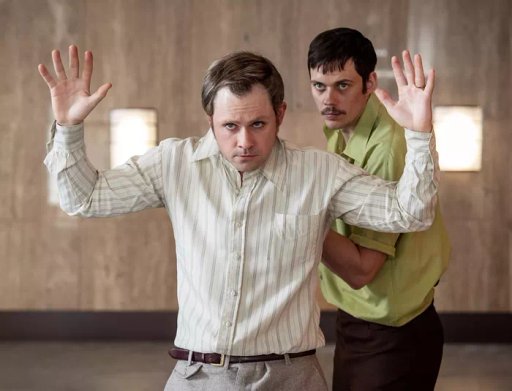
Al Pacino does not appear to ever stand up in this film. by Dom Sinacola Al Pacino does not stand up at any point in Dead Man’s Wire. He's in three scenes, sitting in all of them—supine, in fact. We could call the performance somnambulant were he to ever actually get up and walk.  However, no one expects Pacino to put his whole mid-octagenarian, egregiously feather-haired self into what amounts to a glorified cameo. What everyone should expect, though, is that he’ll roll that old-ass tongue around an accent that must be from the Kentucky side of Indiana—where Gus Van Sant, Dead Man’s Wire director, grew up—because why else would he sound like an ambien’d-up Foghorn Leghorn? Pacino plays mortgage broker M.L. Hall as a pretty straightforward, low-effort Bad Dad, the kind of hyperquiet rich monster who’d rather whisper goodbye to his own son Richard (Dacre Montgomery) than admit to any wrongdoing or compromise with Tony Kiritsis (Bill SkarsgĂ„rd), a desperate behind-on-his-mortgage-payments everyschlub who has taken his son hostage. Dead Man’s Wire is based on a real 1977 Indianapolis hostage situation, where the real Tony Kiritsis kidnapped the son of his mortgage broker at the end of a 12-gauge sawed-off shotgun. In Van Sant's film we see Kiritsis rig the shotgun with the titular wire, setting it up to blow Dick’s head to smithereens if he tries to escape. At first glance, Dead Man’s Wire looks like a return to the media-obsessed true crime Candyland of Van Sant’s early breakthrough To Die For (1995), which was a breakthrough amongst breakthroughs Van Sant enjoyed throughout the late ‘80s and 90s, squeezed between Good Will Hunting (1997) and the twin triumphs of Portland outsider tales, Drugstore Cowboy (1989) and My Own Private Idaho (1991). But the most surprising thing about Gus Van Sant’s first feature in seven years might be that it's a mostly uncomplicated potboiler. Unlike Pacino, SkarsgĂ„rd attacks Kiritsis’ whole deal with barely sublimated intensity, constantly smoothing out his thin mustache to tamp down anger and a sense of personal justice bubbling beneath the surface of his eternally moist dermis. It’s an undeniably charming performance from a preternaturally handsome SkarsgĂ„rd, but his Kiritsis is a whole different physical specimen from the actual Kiritsis.  We know this because Van Sant fills his film with actual news footage from the 62-hour standoff, constantly smearing his fictionalized Indianapolis with the well-documented, if sensationalized, events. Cinematographer Arnaud Potier—most recently employed by Harmony Korine for 2023’s Aggro Dr1ft—helped Van Sant maintain some notion of vĂ©ritĂ© throughout the film. Potier's late-’70s Indiana (filmed in Louisville) is an ochre-and-gray winter urban nowhere that stitches up seamlessly with the well-aged broadcasts from the time. As a result, watching the film feels like being a bystander both at home and on the scene, wondering what all the fuss is about. If you know this story, you know how the movie ends: Kiritsis’ plan to hold the young Hall until he gets the money he feels he’s owed, an apology, and a pardon doesn’t quite go his way. But even if you don’t know this story, it’s difficult to imagine that you wouldn’t have heard about it, had it really broke bad. Deluged by reality, Dead Man’s Wire begins to leak tension, and even the manufactured parts of the narrative don't reveal much we couldn’t gather from a well-written article about what happened. The film never quite exits that liminal space between adapted and contrived. In that sense, Dead Man’s Wire resembles last year’s The Smashing Machine, directed by Benny Safdie and based with meticulous verisimilitude on the 2002 John Hyams documentary of the same name. Led by Dwayne "The Rock" Johnson's performance as iconic mixed martial artist Mark Kerr, the film goes to great lengths to essentially reenact the documentary, in many cases shot-for-shot, to the extent that Safdie’s attention to detail begins to function as an exercise instead of any sort of unique perspective. During the softer moments of Dead Man’s Wire, questions may drift to the back of your mind, like: With all this material, why not just make a documentary? Even Van Sant’s admitted that this was a for-hire directing gig. As geeked as he seems to be able to make a movie quickly in his hometown, he doesn’t exactly evince any real emotional connection to the script, nodding along with the vague thematic ties to his own work. Still, it warms the heart to see Van Sant somewhat back in his thriller element after the sparsely pleasant Don’t Worry, He Won’t Get Far on Foot (2018), which was preceded by my nomination for Van Sant’s worst film, treacly suckfest The Sea of Trees (2015). That an old hand like Cary Elwes—in a very un-Cary-Elwes-like role as scummy cop Mike Grable—and a new working titan like Colman Domingo (as effortlessly cool DJ Fred Temple), are game to join Van Sant’s cast for glossless character work helps liven up the otherwise A-to-B proceedings. It's interesting to have Domingo’s presence, as it reminds us of the last film in which he was the source of light for a dreary ensemble, the spineless Running Man remake starring Glen Powell. And like Powell, SkarsgĂ„rd’s overt handsomeness and effusive likability belies the real anger and naĂŻve sense of injustice at the heart of Kiritsis’s story.  Far from a heady dissection of the media mechanisms that convinced Kiritsis that he could get away with such a plan—that were so prevalent even in the ’70s that he believed popular consensus would prove him to be the hero—Dead Man’s Wire is about as compelling as Pacino’s performance. Regardless, the film should give us hope for a new prolific era in the 73-year-old director’s long career. At least he’s doing something. Dead Man’s Wire opens in wide release on Fri Jan 16, 105 minutes, rated R.
Portland Mercury‱

Swimming Through Trauma in The Chronology of Water

Kristen Stewart’s first feature film interprets Lidia Yuknavitch’s 2011 memoir through fragmentation and aquatic metaphor. “I remember things in retinal flashes. Without order. Your life doesn’t happen in any kind of order
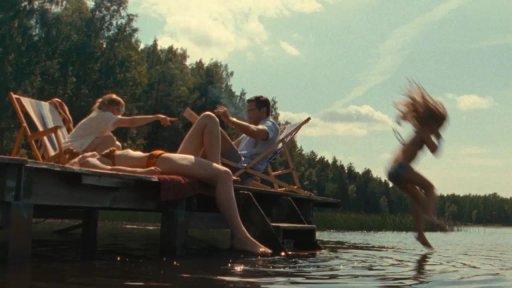
 It’s all a series of fragments and repetitions and pattern formations. Language and water have this in common,” the Oregon-based author Lidia Yuknavitch writes in her 2011 memoir, The Chronology of Water. It follows, then, that director Kristin Stewart’s film adaptation of the book opens without clear exposition. Instead, the camera is submerged, trained upward toward a figure in a red swimsuit. Blood spills onto a shower’s tile floor. The two images—which happen years apart in Lidia’s (Imogen Poots) life—set the tone for a film revealed in fragments of trauma. First, Yuknavitch trains for a swimming competition as a teenager; then, in her twenties, her daughter is stillborn, and she bleeds beneath the shower’s spray, stunned by grief. Stewart’s fractured timeline is central to her translation of Yuknavitch’s fiercely internal, experimental text. Chronology revolves, in many ways, around Lidia’s relationships with men, but it also positions her as a slippery, larger-than-life mermaid, swimming around, beyond, and in spite of them all. The story is at times relentless and exhausting; it’s also an accurate depiction of complex trauma, in which the past and present intermingle. Lidia is a very good swimmer. Growing up in ’70s San Francisco and later in Gainesville, Florida, the pool serves as a refuge from her father (Michael Epp)—a sexually abusive, rage-filled architect, always chainsmoking in the next room, his eyes piercing and empty—and her mother (Susannah Flood), a checked-out alcoholic who diverts her gaze. When young Lidia’s (Anna Wittowsky) teen sister Claudia (Marlena Sniega) leaves home for college, she gives Lidia a copy of Vita Sackville-West’s Saint Joan of Arc. It’s a fitting gift for a girl battling against an all-powerful man, a girl who seems to burn inside. The Chronology of Water. THE FORGE As she grows older and more defiant, Lidia’s interior world is preoccupied by bodies in locker rooms, sweat dripping, passed flasks, and water water water. “My bedroom holds the wet of my body,” she murmurs in voiceover. “It smells like my sweat and chlorine.” Her escape from home is a full-ride swimming scholarship to Texas Tech, where she packs up and heads after calling her father a “motherfucker.” There, she disappears into an epic poem of pills, drinking, and sex with people of all genders. Lidia meets Philip (Earl Cave), a gentle troubadour who is no match for her deeply wounded anger. He strums a guitar while Lidia spits on him. Things unravel. Lidia tries heroin. She gets pregnant and runs away to Eugene to live with Claudia (Thora Birch), now a professor at the University of Oregon (UO). Actors Birch and Poots navigate the homecoming with nuance and careful expressions, conveying the story of their characters’ father without ever naming his abuse directly. Then, Lidia’s baby is stillborn. The delivery room is silent. A cart rolls down the hall. Phillip and Lidia throw a little pink box of ashes into the ocean. It comes the fuck back, bobbing on the tide, trauma resurfacing in the most literal way possible. The two laugh, an unexpected expression of grief unfolding in one small moment. It’s a standout scene in which mourning feels both contained and vast. Lidia wades into the water. Her baby’s ashes swirl and stick to her coat. Grief perseveres. A little levity arrives when Lidia participates in Ken Kesey’s (Jim Belushi) collaborative novel experiment, held with a group of UO students in the late ’80s. Kesey is warm and noisy and totally likable. He rambles about Qualuudes, plays a harmonica, and pushes the importance of ego disintegration. “I know what happened to you. Death is a motherfucker,” he muses in Lidia’s ear. And later: “No one has enough to hold what happens to us.” It’s a scary sentiment to hear from a literary figure like Kesey. If he can’t hold Lidia’s grief, who can?  Stewart’s directorial sense is most compelling when it depicts Lidia’s survival strategies. During the film’s most disturbing flashbacks, the camera looks away, toward ceiling corners and rain splattering against a window. This visual rendering of dissociation allows form and content to reinforce each other. Yet at times, the approach also creates distance. Stewart frequently relies on voiceover to fill in gaps—instead of hearing her father’s graphic sexual language in a scene, for example, Lidia tells the viewer what he said, creating a layer of opacity like a protective membrane. Structured around five chapters—Holding Breath, Under Blue, The Wet, Resuscitations, and The Other Side of Drowning—the film also leans hard on aquatic metaphor. Its repetitions and extreme close-ups assemble a visual word bank: flesh, wet, hair, steam, salt, drool, liquid, pain, baby. Trauma surfaces, screams, numbs, and resurfaces, bleeding and suturing in no particular order.  Like its source material, Chronology is complicated. Some Letterboxd reviews find that the film—which was shot in dreamy 16mm—comes too close to a Tumblr-era sheen, suggesting that it reframes sexual abuse to fit a collaged, screenshottable aesthetic. And at times, Stewart’s stylish approach does seem to aestheticize pain. Yet the film is often brutally honest, too. Both things can be true. The Chronology of Water is an ambitious project by an ambitious director. The film was a labor of obsession for Stewart, who spent eight years completing it and announced in 2024 that she would pause acting until she could secure enough funding to cross the finish line. Its depictions of traumatic memory are relentless to the point of being draining—which is both difficult to watch and accurate. Lidia’s life moves without a clear upward trajectory, instead building and crashing like a wave. Although the film pauses on her happy ending, complete with the trappings of normalcy, it’s evident she still has many laps left to swim. In an interview with Hawthorne Books publisher and editor Rhonda Hughes, Yuknavitch quoted Faulkner: “Given the choice between grief and nothing, I choose grief.” The Chronology of Water bathes in that bravery. The Chronology of Water is playing at Regal Fox Tower, 846 SW Park, and at Living Room Theaters, 341 SW 10th, with an after-screening Q&A with Kristen Stewart, Lidia Yuknavitch, and others at Living Room Theaters on Fri Jan 16 (SOLD OUT).

Portland Mercury‱

Terry Dactyl Traces Queer Survival From the AIDS Crisis to 2020 Seattle

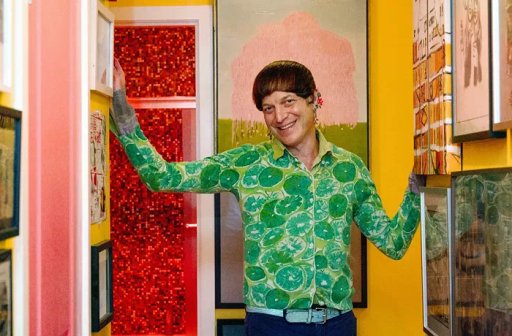
Mattilda Bernstein Sycamore’s signature style rolls and whirls with long sentences—descriptions as artfully enduring as her characters. [This profile originally appeared in our sister pub The Stranger. -eds] Mattilda Bernstein Sycamore takes long and meandering walks through Capitol Hill most days. From the height of summer to the depths of winter, if the sun is out, she’s soaking in it. On these walks during the pandemic lockdown, Terry Dactyl came to her. She couldn’t write it immediately because she was working on her memoir, Touching the Art, which came out in 2023. Before that, there was The Freezer Door, Sketchtasy, So Many Ways to Sleep Badly, among other novels and memoirs, plus six anthologies and another currently in the works. She’s a prolific queen because writing is survival, she says. “Writing is my process of staying alive,” Sycamore says. “It is embedded in how I live. Specifically, writing everything that I dream of, and everything that fails me, all of the emotional reality. Often, there are things I’m afraid to say, and then I put them in my writing, and they’re said. Then I can say it! I can read it in the book, and people aren’t that shocked by it. Often, what people are shocked by has nothing to do with what I’m afraid of. When I write the things that I think, ‘If I write it, I might die,’ and then I write it and I don’t die, that’s part of the process of staying alive.” Sycamore goes deeper still about this question of life or death, how it has been quite literal for her, and how writing has shown her how to live differently in the world. “When I was a teenager, growing up in a world that wanted me to die or disappear, I had to project invulnerability in order to survive. There was no other way. That was just reality, you know? I needed that invulnerability.” Once upon a time, The Stranger’s Homosexual Agenda column described Sycamore as a “gender-fucking tower of pure pulsing purple fabulous,” and I’d say that description stands, in case you need context for why she grew up thinking the thickest of skins was a way to stay alive. But that’s changed for her. “Now, vulnerability is how I connect with people and my work,” Sycamore says. “I’m always writing toward the gaps, the moments of failure or frights or fear, anxiety, loneliness, and the moments that allow us to survive. Those sudden moments of connection in the world, when we move deeper into breath, whatever creates that. I think often what creates that [breath] is being honest about all the depth of everything that weighs us down.” Terry Dactyl is filled with these moments, one after another, and it’s what makes the novel powerful and compulsively readable, especially as she essentially restarts the story halfway through. But we’ll come back to that. The book follows our protagonist, Terry Dactyl, from childhood to midlife. Terry is a trans girl from Seattle’s Capitol Hill neighborhood who gets into Columbia University, then drops out after a year and becomes a club kid in New York City in the ’90s and early 2000s. When COVID-19 descends, she returns to Seattle, where she seeks connection with a neighborhood and a city she finds utterly changed. That connection is sought through long meandering walks while in the midst of chronic pain that catches up with her after years of self-medicating through drugs, mostly. Without them, Terry finds her body ravaged by what she’s lived through. “That is how the book started for me. I was just walking around in Seattle, I guess in 2020 or 2021, and this character came to me. I started thinking about all these details about her life. Like, her relationship with her mother. I picked the house where she grew up. Her first few years, she was living at the Biltmore. Then she moved to 12th Avenue. It was all being mapped out as I was walking around, and finishing my previous book, Touching the Art. It just kept spinning in my head for at least six months before I wrote a word.” The book starts in 2020 in New York City. The story then takes us to the AIDS crisis of the ’80s and ’90s in Seattle and New York, then back to the COVID-19 pandemic and the crisis of police brutality in this country that surfaces to the mainstream (again). “Terry’s experience of the world is formed through trauma in its fullest sense. Growing up in the midst of the AIDS crisis, this little kid watched as all of her mother’s friends—who are her friends and her role models—were dying before her eyes. The end of the book [depicts a] traumatized sense of time, because trauma is the pulse. It’s a living, breathing pulse, a three-dimensional experience, or maybe it’s a six-dimensional experience because it gives you all of these ways of thinking and experiencing the world that might not be available to other people. Then all the people she knows in New York die of AIDS, including her girlfriend, who is the central figure in the little world of club kids that she’s a part of. So, in some ways, the book is about what happens for the people who survived.” Sycamore heightens Terry’s experience through her longest sentences yet (which is really saying something since Sycamore’s writing is marked by a signature style that rolls and whirls with long sentences). While reading, I imagined these sentences taking on the rhythm and breath of Sycamore’s hours-long daily walks. “The first long sentence is the first sentence [of the book]. It’s, like, half a page. [Terry’s] on the dance floor at the Limelight, and she’s enthralled with Sid [who becomes her girlfriend], who she meets on the dance floor, and Sid is doing this really intense, surprising performance. In the middle of this crowded dance floor, [Terry is] in her own world. I wanted the sentences to be their own world. Those sentences allow the voice to take possession, and the voice and the character are what drive the book.” By the time Terry returns to Capitol Hill, her outer world becomes simpler, but her inner world becomes richer than ever. I lived in Capitol Hill during the pandemic, and reading this book was a visceral memory returned: If you were there, you remember the flash bombs and tear gas and helicopters all night. The terror of all that, on top of the nerve-wrecking walks in the early days when fuckers didn’t wear masks (I’m still mad at them) or keep a distance, and we were otherwise trapped inside. And in all that rage and fear and loss, Terry finds a moment of what Sycamore called “public love.” “When Terry experiences it in the book, is when everyone’s yelling for essential workers, and she starts a chant, black lives matter, abolish the police. That’s when she feels, finally, connected to this neighborhood where she grew up. She grew up there, but it’s not that place anymore. When she grew up, she was a little kid wandering around [in her own house], and all these queens [friends of her mom’s] were like, hey, girl. She was this trans girl coming of age, there was a sense of communal possibility in everyday experience. But that’s gone. So when she feels it, it’s in those moments of screaming out as loud as she can, and blowing her whistle to the tune of black lives matter, abolish the police, and then when people join in, that’s the key. And when someone yells, I love you, and it’s just a random person, it’s only a moment, they don’t get to know one another: That’s where the communal possibility exists. That’s love as a public force. That ritual for Terry is her way of connecting politically with the world, but also with her own history of this neighborhood that formed her, and that now feels, in some ways, like somewhere she had never been before.” For those that need a more fleshed-out introduction to this local legend, Sycamore is a self-described “faggot, a queen, genderqueer, trans, and nonbinary,” and she’s also an activist and anarchist. She’s resisted traditional systems from her earliest beginnings, growing up in Washington, D.C., and came into herself in San Francisco working with ACT UP (AIDS Coalition to Unleash Power). This beginning shaped her work and her voice, and certainly helped shape and inspire Terry Dactyl and her experiences in the book. “All of us experienced the beginning of the pandemic, and that moment of absolute fear, and also, a moment when we were all together. That was the rhetoric, but it also felt that way, because no one knew what the fuck was going on. Everyone felt vulnerable, and in that vulnerability, there was a possibility. That possibility has been squandered. It’s gone. It’s over. It ended as soon as businesses started reopening. Now we’re living in that loss. But I think that moment of communal possibility, that’s what I mean by love as a public force.” Lucky for us, we’re alive to take in this latest work from a local heartthrob and a writer who has been recognized by practically every major and minor queer and radical author of the last 20 years. Make way for Sycamore’s latest in your minds, your hearts, and your purses, honey. She won’t let you down.  Mattilda Bernstein Sycamore appears in conversation with Leni Zumas, Powell's Books on Hawthorne, 3723 SE Hawthorne, Tues Jan 13, 7 pm, FREE, all ages.

Portland Mercury‱

Second Run Portland: Rich People Behaving Badly

Peter Greenaway’s gourmet art film and Frederick Wiseman’s snowy documentary show vastly different approaches to class critique. Some claim that January is a cultural dead zone for events, and on days when the sun seems to clock out at noon, it’s hard to argue. But while much of the city hibernates, one institution keeps the lights on. Thanks, independent movie theaters!! This month’s screenings come through with interesting takes on class critique and iconic Miyazaki films; read on for the scoop on those, plus six other films that feel anything but sleepy.   Studio Ghibli Film Festival For fans of Laika Studios, Makoto Shinkai’s Your Name (2017), Mamoru Hosoda’s The Girl Who Leapt Through Time (2006). Asking someone whether they like Studio Ghibli films is a bit like asking whether they like cinema at all. Over the past four decades, the Japanese animation studio has become synonymous with emotionally resonant storytelling and poetic, intelligent engagement with nature and the more-than-human world. These aren’t just “kids’ movies” by any stretch—although your kid is certain to love them, if they don’t already. If you're a Ghibli devotee, you know all of this, and you’re likely jazzed for the return of OMSI's annual Studio Ghibli Film Festival. This year’s edition opens with a 4K restoration of Princess Mononoke, followed by crowd pleasers like My Neighbor Totoro and Kiki's Delivery Service. A few lesser-screened entries are also very worth your time. Ghibli co-founder Isao Takahata was responsible for the studio’s gentlest and most lyrical work—films like the delicate, textural growing-up story Only Yesterday and the airy, folkloric film The Tale of the Princess Kaguya. Those screen in early February, but this month, OMSI’s Reel Eats showing of Hayao Miyazaki’s Shinto-influenced 2001 film Spirited Away (January 14-15) sounds like the most fun. Your ticket comes with a tasting menu of “6-12 bites” that correlate with on-screen scenes. (OMSI Empirical Theater, 1945 SE Water, January 16-March 2, times vary, $9-$36, more info, age recommendations vary) Aspen in 16mm For fans of Albert and David Maysles, Les Blank, Tamara Kotevska and Ljubomir Stefanov’s Honeyland (2019). Under-the-radar screening collective Spectrum Between—known for holding avant-garde film programs at secret locations that feature experimental directors like Stan Brakhage and Barbara Hammer—takes a turn toward observational documentary with this 16mm screening of Frederick Wiseman’s Aspen at 5th Avenue Cinema. Wiseman has spent over 50 years crafting documentaries that expand and complicate cinĂ©ma vĂ©ritĂ©. His films avoid voiceovers and talking heads, but feel subtly novelistic, crafted with moral curiosity in mind. Influenced by forebears like D.A. Pennebaker and the Maysles brothers, Wiseman has chronicled institutions from a Dallas Neiman Marcus (The Store) to the Bridgewater State Hospital for the Criminally Insane (Titicut Follies), always with a patient, incisive anti-elitism. Aspen is less-cited in Wiseman’s filmography, but it exemplifies his observational style. The 1991 film looks closely at Reagan-era wealth disparity (and, in Spectrum Between’s words, “spiritual desperation”) through the lives of rich vacationers and the working class at a Colorado ski resort. It’s sharp without saying a word outright, and often funny. Wiseman is known for his four- to six-hour runtimes, so the film’s two-and-a-half hour length is comparatively breezy. (5th Avenue Cinema, 510 SW Hall, Sun Jan 18, 7 pm, $10-$20 sliding scale, more info, not rated) The Cook, the Thief, His Wife & Her Lover For fans of Dutch Baroque painting, Angela Carter, Derek Jarman’s Caravaggio (1986). Peter Greenaway’s 1989 provocation unfolds almost entirely inside a fancy French restaurant. Spica (Michael Gambon) is a pervy, sadistic gangster and a rich patron who—among his numerous flaws—never shuts the fuck up. His fashionable and miserable wife Georgina (Helen Mirren) escapes to the powder room to indulge in an ill-advised affair with a restaurant regular. Greenaway’s films often skew theatrical, with careful blocking and elaborate, tableau-like compositions, but The Cook, the Thief, His Wife & Her Lover pushes his style to Baroque extremes. Lateral dolly shots glide through luxe dining rooms drenched in red velvet and painterly kitchen scenes. Tables pile high with thick slabs of meat and bundled herbs. A Frans Hals painting looms in the background, while Jean Paul Gaultier’s bondage-style corsets give Georgina an armored edge. The visual impact is overwhelming, akin to Yorgos Lanthimos’ Poor Things with more decadence and cruelty. (This recommendation carries a content warning for just about everything, including domestic violence and a dog death.) The Cook, the Thief, His Wife & Her Lover’s emphasis on Spica’s gluttony and violence offers a grotesque, imaginative class critique; the results feel unrestrained and darkly funny. Catch it at the Portland Art Museum’s Whitsell Auditorium, reopening for PAM CUT programming on January 10. (PAM CUT  at the Whitsell, 1219 SW Park, Sun Jan 25, 2 pm, more info, unrated) Flesh for Frankenstein Produced by Andy Warhol, directed by Factory regular Paul Morrissey, and starring beloved German eccentric Udo Kier (who passed in November), Flesh for Frankenstein’s campy, transgressive take on the Gothic sci-fi story is gleefully unfaithful to Mary Shelley’s novel. Fans of Rainer Werner Fassbinder and Peter Greenaway will appreciate its aesthetic excess. (Academy Theater, 7818 SE Stark, January 9-15, more info)  Swing Girls After accidentally poisoning their high school’s brass band, a Japanese friend circle decides the only logical solution is to start their own jazz ensemble. Makes sense to me! Shinobu Yaguchi’s 2004 film is light, airy, and comforting. See it if you’re sad. (PAM CUT’s Tomorrow Theater, 3530 SE Division, Sat Jan 10, more info) Mothra vs. Godzilla With her rebellious attitude and atmospheric theme song/hymn sung by miniature priestess-fairies the Shobijin, mystical Mothra rules. Witness the divine kaiju in all her genetically engineered glory as she whips ass on Godzilla in this ’64 entry. (Academy Theater, 7818 SE Stark, January 23-29, more info) All the Colors of the Dark There's nothing quite like ’70s Italian horror. You want occult paranoia, psychedelic tailspins, and sexual tension? You got it. Prime example: Sergio Martino's giallo flick All the Colors of the Dark, featuring black masses and devilish detours Ă  la Rosemary's Baby. (Academy Theater, 7818 SE Stark, January 23-29, more info) Rope Hitchcock's ’48 thriller follows two dapper psychopaths as they strangle a guy, stuff his body in an antique chest, and proceed to host a dinner party. Naturally, they start acting weird about it, and dramatics ensue. (Cinema 21, 616 NW 21st, Sat Jan 24, more info)  Mississippi Masala Mira Nair—a filmmaker with a keen eye for cultural narratives who also happens to be New York mayor Zohran Mamdani’s mom—directed this romance between Mina (Sarita Choudhury), an Indian-Ugandan woman and a Black Southerner carpet cleaner named Demetrius (Denzel Washington). Screening as part of Clinton Street Theater’s Color & Sound series, the film’s cross-genre soundtrack and vibrant palette will shake off the post-holiday grays. Half of ticket proceeds go to support the Portland Immigrant Rights Coalition’s legal defense and rapid response work. (Clinton Street Theater, 2522 SE Clinton, Sat Jan 31, more info)

Portland Mercury‱

Literary Portland for Palestine Plans Readings, Still Asks Literary Arts To Divest

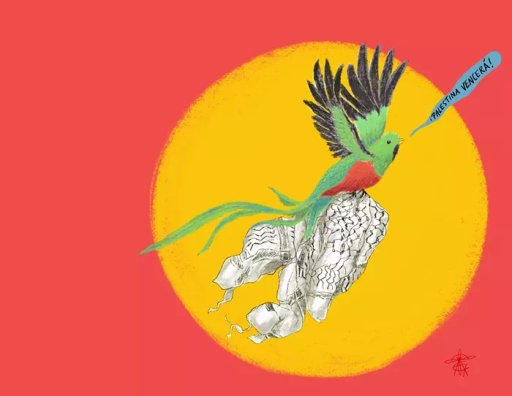
A call for Portland Book Festival to reject corporate bank funding coalesced into a collective that seeks to raise awareness with the written word. At Portland Book Festival, in November, you may have noticed an icon on t-shirts, posters, and social media of Literary Arts' red umbrella dropping bombs. The graphic read "Drop Wells Fargo" and "Literary Portland for Palestine." The shirts were a next step in a call to action, which grew loud in late summer and shows signs of continuing long after the 2025 lit fest has passed.  A new collective formed around the issue says they're intentionally raising awareness across the street from Literary Arts at Mother Foucault's Bookshop. An upcoming reading titled 4 Palestinian Poets presents an opportunity to hear Lena Khalaf Tuffaha—winner of the 2024 National Book Award for Poetry. In late July, a number of writers and local arts organizations penned a letter asking Literary Arts, the nonprofit that has run Portland Book Fest since 2015, to turn down sponsorship and funding from financial institutions like Wells Fargo and Bank of America. "Literary Arts has foregrounded many writers who speak truth to power
 in that spirit, we ask you to say 'no' to sponsorship from banks that profit from and facilitate the destruction of Palestine, that are deeply implicated in the global arms trade overall.
," the letter states, noting the banks' dealings with US weapons manufacturers Raytheon and Lockheed Martin and Israel-based Elbit. Literary Portland for Palestine's letter garnered over 400 signatures from nationally recognized authors like Naomi Klein and Torrey Peters and local powerhouses like Anis Mojgani, Walidah Imarisha, and Jon Raymond. It was signed by Oregon Book Award winners, Oregon Literary Arts Fellowship recipients, and Omar El Akkad, who serves on the Literary Arts board. Literary Arts responded with a form rejection, writing to the Mercury and other outlets: "We are aware of concerns raised regarding Portland Book Festival sponsorships and take seriously the values and voices of the literary community." The statement went on to explain that sponsorships help keep ticket prices affordable. The tone of the letter suggested a potential boycott, but many signers were present at the fest, some wearing the "Drop Wells Fargo" shirts as they read their work, handing out sheets of poems by Palestinian poets with purchases, or discussing the issue onstage. A new collective of around 25 local writers and arts organizations calling themselves Literary Palestine for Portland consolidated from the debate, even as Literary Arts itself never publicly engaged with the ask. "I think that we really coalesced around the Portland Book Festival and we were still in the stages of figuring out where we wanted our focus to be," says author and educator Sara Jaffe, a founding member of Literary Portland for Palestine who read from her new book Hurricane Envy at the fest. Jaffe explained that the majority of those organizing felt that there hadn't been enough time allowed for the fest to divest from its sponsors, so they turned their attention to raising awareness. According to Jaffe, the group's attention remains focused on Literary Arts, but they began to ask themselves what they could do alongside asking Portland Book Festival to divest. "When we were contacting people and asking them to speak up [at Portland Book Festival], we definitely heard back from some: Literary Arts is such an important organization. They're not the bad guys, etc.. " Jaffe says. "But it's because of these relationships
 it's these grassroots connections that are the places where we can try to affect this kind of change. You know, we're not talking to Wells Fargo. Why would we talk to Wells Fargo?" Now with an upcoming reading at Mother Foucault's—picked partially for its placement across the street from Literary Arts' bookstore and headquarters—Literary Portland for Palestine signals that their rally cry will continue to grow in volume. And because they're a literary organization, they're doing it with poems. The 4 Palestinian Poets event presents an opportunity to hear National Book Award winner Lena Khalaf Tuffaha, along with Philadelphia-based Ahmad Almallah, whose third collection Wrong Winds was published by local press Fonograf in 2025. Portland poets Jaye Nasir and Veera Sulaiman round out the bill. Jaffe and another organizer Jeff Alessandrelli say this is merely one of many more events to come. The reading is free to attend, but mutual aid fundraisers Creators for Gaza will have a table where people can donate or purchase prints, herbal tea, and other offerings to provide direct aid to families in Gaza.  Replying to the event's flyer, a commenter asks: "What can attendees expect at this event?" The flyer artist responds: "Poets reading poems." Literary Portland for Palestine presents 4 Palestinian Poets at Mother Foucault's Bookshop, 715 SE Grand, Fri Jan 9, 7 pm, FREE, more info at literaryportlandforpalestine.com

You've reached the end